














Recognizing magnesium deficiency: 15 possible symptoms and what you can do
Which signs indicate a magnesium deficiency and why symptoms alone are not enough


Popular searches
Popular Categories

A magnesium deficiency can be accompanied by muscle cramps, muscle twitching, fatigue, weakness, tingling, or cardiac arrhythmias, among other things, but it cannot be diagnosed based on these symptoms alone. This is important if you want to classify recurring symptoms or check your magnesium intake.
Magnesium is an essential mineral that the body must obtain through diet. Magnesium contributes to normal muscle function. Magnesium contributes to normal functioning of the nervous system. Magnesium contributes to normal psychological function.
In addition, magnesium contributes to normal energy-yielding metabolism. Magnesium contributes to the reduction of tiredness and fatigue. Magnesium contributes to electrolyte balance. Magnesium contributes to the maintenance of normal bones and teeth. These functions also explain why magnesium is relevant to various areas of the body.
A magnesium deficiency does not necessarily cause discomfort. However, in the case of a long-standing or more pronounced deficiency, various symptoms may occur. None of these symptoms proves a magnesium deficiency on its own, as the same complaints can have numerous other causes.
Complaints such as fatigue, weakness, or muscle cramps are specifically non-specific. Conversely, a low intake of magnesium can initially remain without noticeable symptoms.
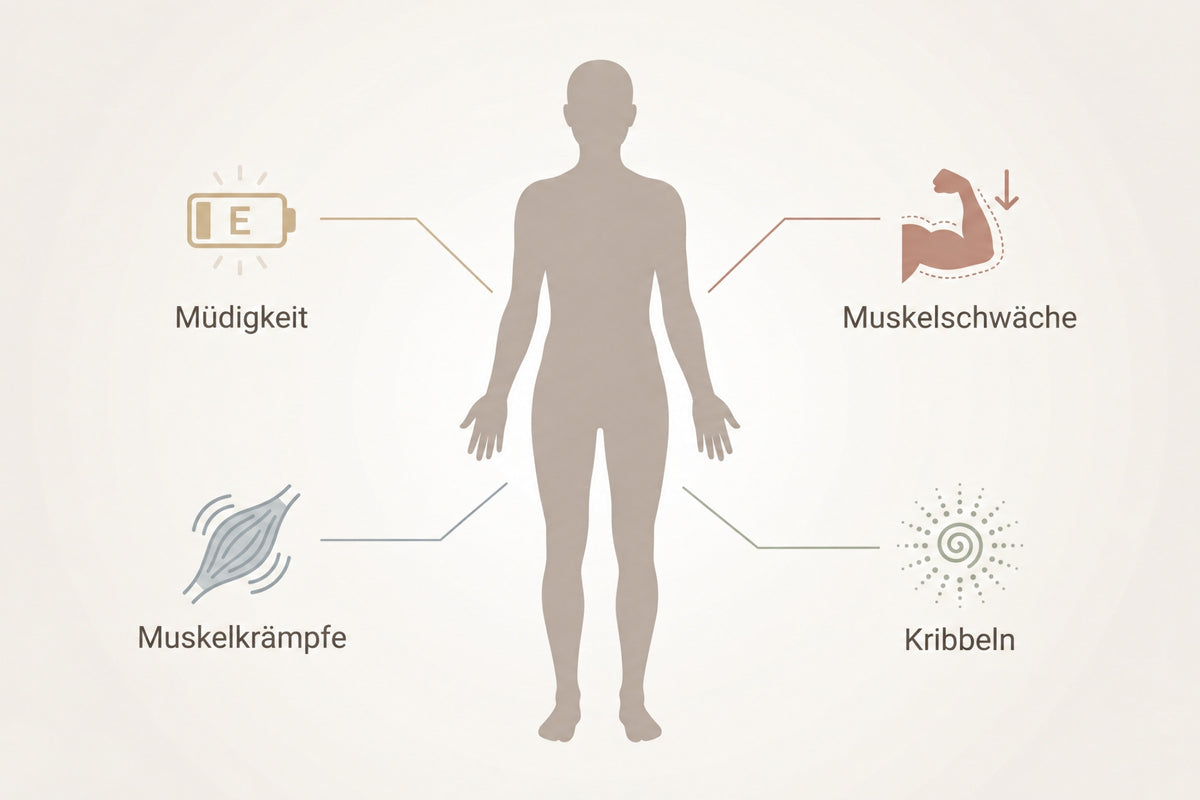
A magnesium deficiency can cause various symptoms, but individual complaints are not sufficient for a diagnosis.
Symptomatic magnesium deficiency caused solely by low intake is quite rare in otherwise healthy individuals. When intake is low, the body can, among other things, reduce excretion via the kidneys.
A higher risk exists, among other factors, with certain gastrointestinal diseases that impair absorption, with long-term high alcohol consumption, and in older age. Certain medications can also influence magnesium absorption or increase its excretion.
Therefore, it is not just the amount of magnesium consumed through food that is decisive. Diseases, medications, and increased losses can also play a role in assessing magnesium status.
Do not self-diagnose symptoms
Muscle cramps, fatigue, tingling, or weakness are not specific to a magnesium deficiency. If symptoms persist or are severe, or in the case of cardiac arrhythmias or seizures, it is important to consult a doctor.
Symptoms alone are not sufficient for the diagnosis of a magnesium deficiency. In medical diagnostics, the magnesium concentration in the blood, among other things, can be determined. However, assessing magnesium status is not always straightforward, because the serum concentration can be normal even when magnesium stores in the body are depleted.
Therefore, in addition to laboratory values, symptoms, dietary habits, pre-existing conditions, and medications can be relevant for a medical assessment. If there is a concrete suspicion, a medical examination is more meaningful than attempting to self-diagnose a deficiency based on a list of symptoms.
Magnesium is found in numerous foods. A varied diet can therefore make a significant contribution to your daily intake. Sources of magnesium include, for example, pumpkin seeds, sunflower seeds, almonds, cashews, oatmeal, legumes, and spinach. Magnesium-rich mineral water can also contribute to your daily intake. The extent to which an individual food contributes to your supply depends on its magnesium content and the amount actually consumed. It is therefore more sensible to look at magnesium intake across your entire diet than to focus on a single food item.

The German Nutrition Society provides an estimated value for an adequate magnesium intake of 350 mg per day for men and 300 mg per day for women for adults. For pregnant and breastfeeding women, the estimated value is also 300 mg per day.
These values refer to the total daily magnesium intake. They are not to be equated with the dosage of a dietary supplement. Food remains an important basis for magnesium supply.
With magnesium bisglycinate, magnesium is bound to the amino acid glycine. It is therefore a specific magnesium compound that is used in dietary supplements, among other things.
The difference between magnesium bisglycinate, magnesium citrate, or other compounds initially lies in the chemical form of the magnesium it contains. When choosing a supplement, it is also worth taking a look at the actual amount of magnesium contained per capsule or daily serving, the additional ingredients, and the recommended intake.
If you would like to improve your magnesium intake, it is worth starting by taking a look at your diet. Seeds, nuts, whole grain products, legumes, and green vegetables can be regularly integrated into your meal plan.
In the case of recurring or severe symptoms, however, it should first be clarified whether a magnesium deficiency actually exists and what is causing it. This applies especially if there are underlying medical conditions or if medication is taken regularly.
Dosage is also relevant for dietary supplements. The Federal Institute for Risk Assessment recommends a maximum amount of 250 mg of magnesium from dietary supplements per daily recommended serving of a product and advises spreading this amount over at least two portions per day.
The described symptoms of a magnesium deficiency include, among others, fatigue, weakness, muscle cramps, muscle twitching, tingling, numbness, nausea, and loss of appetite. In cases of severe deficiency, cardiac arrhythmias or seizures may also occur.
No. Muscle cramps can occur due to a magnesium deficiency, but they have numerous potential causes. Recurring or severe symptoms should therefore not be attributed solely to a magnesium deficiency based on this symptom alone.
Magnesium levels can be determined in the blood. However, the assessment is not always definitive because serum concentrations can be normal even when magnesium stores in the body are depleted. Medical evaluation therefore takes other factors into account where necessary.
The DGE cites an estimated value for an adequate intake of 350 mg of magnesium per day for men and 300 mg per day for women for adults. This refers to the total daily intake.
Magnesium is found in pumpkin seeds, sunflower seeds, almonds, cashews, rolled oats, legumes, and spinach, among other things. Depending on its magnesium content, mineral water can also contribute to your intake.
Magnesium is the mineral itself. In magnesium bisglycinate, magnesium is bound to the amino acid glycine. The name therefore describes the magnesium compound in which the mineral is present in the supplement.
This article is for general information purposes only and does not replace professional medical advice, diagnosis, or treatment. Dietary supplements are not a substitute for a balanced and varied diet or a healthy lifestyle.
Collagen is not only found in bone broth or animal-based foods. Bell peppers, legumes, seeds, and other foods also provide important nutrients for the body's own collagen production.
Read moreShade-grown, hand-harvested, whisked with 80-degree hot water. What makes good matcha, how to prepare it at home, and three recipes that go beyond the latte.
Read moreLearn all about the effects of turmeric: how curcumin supports your health, how to increase bioavailability, and delicious recipes for your everyday life.
Read moreDid you know that your diet affects the production of your happy hormones? So there's good news: You can eat yourself happy.
Read moreBright green, finely ground, and traditional from Japan: Matcha differs significantly from ordinary green tea. What is actually in the powder is what counts.
Read moreThe yoga mat is ready, yet the phone stays in your hand at night. Good intentions rarely fail for lack of ideas, but rather because they don't fit into everyday life in the long term.
Read moreSleep better, wake up more refreshed: Discover 5 simple tips that can help you wind down more easily in the evening and support restful sleep.
Read moreMore warmth and balance in autumn: Discover 5 nourishing rituals to help you experience the cooler season consciously and comfortably.
Read moreIt’s getting cold outside, and the heating is on inside. Now, seasonal nutrition, tried-and-tested daily routines, and Ayurvedic traditions all meet.
Read moreEating in a rush, certain foods, or stress can be behind a bloated belly. Learn about the possible causes and what you can pay attention to in your everyday life.
Read moreBisglycinate, citrate, or oxide? Magnesium supplements differ in more than just their names. This comparison shows what to consider when choosing a form of magnesium.
Read more