





10 foods for natural collagen production
These nutrients support your skin from within


Popular searches
Popular Categories

Collagen is the most abundant structural protein in the human body and an important component of skin, bones, cartilage, tendons, and connective tissue. It provides strength, elasticity, and stability. However, the body's own collagen production begins to slowly decline from around the age of 25. As we age, this process becomes increasingly visible, manifesting in wrinkles, reduced skin elasticity, or changes in connective tissue, among other things.
The good news: Even though the natural aging process cannot be stopped, you can optimally support your body with a balanced diet. Certain foods provide essential amino acids as well as vitamins and minerals that are involved in the body's own collagen formation.
In this article, we will show you the 10 best foods for natural collagen production and explain why they are so valuable.
Collagen accounts for around 30% of all proteins in the human body. It forms the framework of our connective tissue and ensures that skin, joints, and bones remain stable and resilient.
For the body's own collagen production, it primarily requires:
The better the body is supplied with these nutrients, the better the conditions for natural collagen formation.
1. Bell peppers
Bell peppers are among the best sources of vitamin C available. A single red bell pepper can cover the daily requirement for vitamin C. Vitamin C contributes to normal collagen formation and is therefore one of the most important nutrients for the skin and connective tissue.
2. Citrus fruits
Oranges, lemons, limes, and grapefruits also provide plenty of vitamin C. They support natural collagen formation while simultaneously providing valuable phytonutrients.
3. Berries
Strawberries, currants, raspberries, and blueberries contain numerous polyphenols and antioxidants in addition to vitamin C. These help protect cells from oxidative stress, which is an important factor for healthy skin.
4. Leafy green vegetables
Spinach, kale, or Swiss chard provide vitamin C, beta-carotene, and numerous other micronutrients. They should therefore be a regular part of your diet.
5. Legumes
Lentils, chickpeas, and beans provide high-quality plant protein as well as zinc and copper. These minerals play a role in various metabolic processes and complement a collagen-friendly diet.
6. Pumpkin seeds
Pumpkin seeds are among the best natural sources of zinc. Zinc contributes to the maintenance of normal skin and supports numerous enzymatic processes in the body.
7. Cashews
Cashews provide copper. Copper contributes to the maintenance of normal connective tissue and thus supports important bodily structures.
8. Eggs
Eggs contain high-quality protein and provide various amino acids that the body needs for building its own proteins, among other things.
9. Fish
Salmon, trout, or sardines provide high-quality protein as well as omega-3 fatty acids. Protein supplies the body with the building blocks required for constructing various internal proteins.
10. Bone broth
Bone broth naturally contains collagen or gelatin, which is created by boiling bones for a long time. However, the actual collagen content can vary significantly depending on the preparation and the ingredients used.

It is not a single food that determines collagen production, but the interplay of different nutrients.
Particularly important are:
A varied diet is therefore the best foundation for optimal supply.
In addition to classic sources of vitamin C, it is also worth regularly incorporating foods with high antioxidant content into your diet.
These include, among others:
They provide valuable phytonutrients and are an ideal complement to a balanced diet.
A balanced diet forms the foundation for a healthy collagen supply. At the same time, the body's own collagen production naturally decreases with age. For this reason, many people choose to supplement with high-quality collagen hydrolysate. Studies show that hydrolyzed collagen is well absorbed by the body and has been investigated particularly in the areas of skin health and joint function. The results suggest that regular intake can have positive effects, even if the impact varies from person to person.
If you are looking to supplement your diet, it is worth taking a look at the quality of the collagen.
At Inner Sparkle, we use high-quality hydrolyzed grass-fed bovine collagen. It provides the collagen-typical amino acids glycine, proline, and hydroxyproline, is particularly easy to stir into coffee, matcha, smoothies, or porridge thanks to its fine structure, and contains no sugar or unnecessary additives.
Our collagen is flavorless, lab-tested, and easy to integrate into your daily routine as a sensible addition to a varied and nutrient-rich diet.

A balanced diet rich in vitamin C, high-quality protein, zinc, and copper creates the best conditions for natural collagen formation. Foods such as bell peppers, berries, legumes, nuts, or green leafy vegetables should therefore be a regular part of your diet. Since the body's own collagen production naturally declines with age, a high-quality collagen hydrolysate can be a useful supplement. In combination with a nutrient-rich diet, it helps you to optimally provide your body with the building blocks it needs every day.
Particularly important are foods that provide vitamin C, high-quality protein, zinc, and copper, for example, bell peppers, berries, legumes, nuts, and green leafy vegetables.
Yes. Collagen is primarily found in animal-based foods such as bone broth or the skin of fish and poultry. In addition, protein-rich foods provide the amino acids that the body needs to build its own proteins.
Vitamin C contributes to normal collagen formation for the normal function of skin, bones, cartilage, blood vessels, teeth, and gums.
The body's own collagen production begins to slowly decrease from around the age of 25. This process continues as you age.
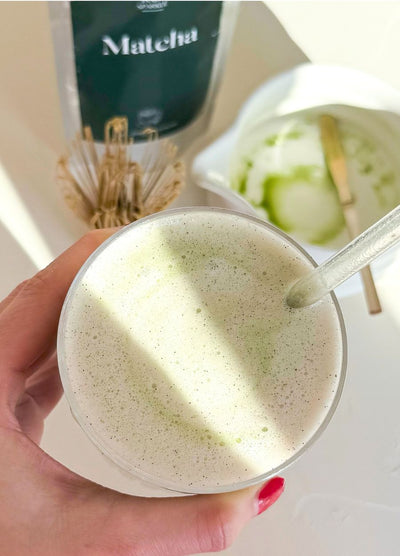
According to the consumption recommendations, Inner Sparkle Collagen Hydrolysate can be stirred into both cold and warm drinks. Thanks to its neutral taste, it is suitable for coffee, matcha, smoothies, or water, for example.
Classical collagen is not vegan, as it is obtained from animal source material. Collagen hydrolysate can be of bovine, porcine, or marine origin, depending on the product.
This article is for general information purposes only and does not replace professional medical advice, diagnosis, or treatment. Dietary supplements are not a substitute for a balanced and varied diet or a healthy lifestyle. If you have any pre-existing medical conditions, are pregnant, breastfeeding, or taking medication regularly, you should consult your doctor before taking any dietary supplements.
Shade-grown, hand-harvested, whisked with 80-degree hot water. What makes good matcha, how to prepare it at home, and three recipes that go beyond the latte.
Read moreLearn all about the effects of turmeric: how curcumin supports your health, how to increase bioavailability, and delicious recipes for your everyday life.
Read moreDid you know that your diet affects the production of your happy hormones? So there's good news: You can eat yourself happy.
Read moreBright green, finely ground, and traditional from Japan: Matcha differs significantly from ordinary green tea. What is actually in the powder is what counts.
Read moreThe yoga mat is ready, yet the phone stays in your hand at night. Good intentions rarely fail for lack of ideas, but rather because they don't fit into everyday life in the long term.
Read moreSleep better, wake up more refreshed: Discover 5 simple tips that can help you wind down more easily in the evening and support restful sleep.
Read moreMore warmth and balance in autumn: Discover 5 nourishing rituals to help you experience the cooler season consciously and comfortably.
Read moreIt’s getting cold outside, and the heating is on inside. Now, seasonal nutrition, tried-and-tested daily routines, and Ayurvedic traditions all meet.
Read moreEating in a rush, certain foods, or stress can be behind a bloated belly. Learn about the possible causes and what you can pay attention to in your everyday life.
Read moreBisglycinate, citrate, or oxide? Magnesium supplements differ in more than just their names. This comparison shows what to consider when choosing a form of magnesium.
Read moreNocturnal muscle cramps, fatigue, or tingling can have many causes. However, some of these symptoms can also occur in cases of magnesium deficiency.
Read more