







Which magnesium is the best? The big comparison of all forms of magnesium
Magnesium bisglycinate, citrate, oxide and the like differ in composition, magnesium content, and tolerability.


Popular searches
Popular Categories

Anyone looking for a magnesium supplement will quickly come across terms like magnesium bisglycinate, magnesium citrate, magnesium oxide, or magnesium chloride. But how do these forms of magnesium differ, and which magnesium is actually the best?
The short answer is: There is no single best form of magnesium for everyone. Which compound is best suited depends on your individual needs, your tolerance, and the desired area of application.
In this article, you will learn which forms of magnesium exist, what their pros and cons are, and why magnesium bisglycinate is a particularly good choice for many people.
Magnesium does not appear in dietary supplements as pure magnesium, but is always bound to another substance, for example to an organic acid or an amino acid.
This compound influences, among other things:
Therefore, it is worth taking a closer look.
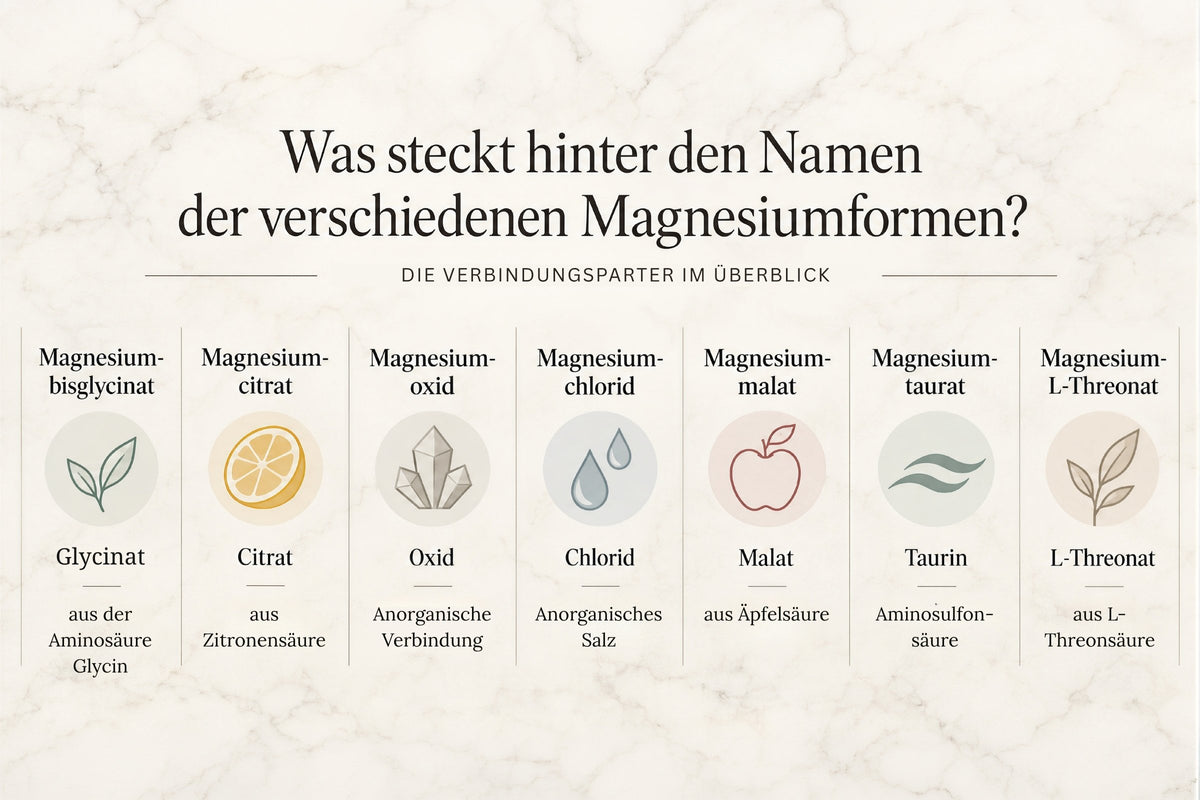
The various forms of magnesium differ due to their respective chemical compound partners.
Bound to: the amino acid glycine
Benefits:
Potential drawbacks:
Who is it suitable for?
Bound to: Citric acid
Advantages:
Potential disadvantages:
Magnesium citrate can have a laxative effect in higher amounts and is therefore not equally well tolerated by everyone.
Suitable for:
People who tolerate magnesium well and do not have a sensitive digestive system.
Advantages:
Potential disadvantages:
Magnesium oxide is absorbed less effectively than organic magnesium compounds and can more frequently lead to digestive issues.
Bound to: chloride
Advantages:
Potential disadvantages:
Suitable for whom?
Bound to: Malic acid
Benefits:
Potential drawbacks:
Suitable for whom?
Bound to: Taurine
Benefits:
Potential drawbacks:
Suitable for whom?
Bound to: L-threonic acid
Benefits:
Potential drawbacks:
Who is it suitable for?
For many people, the answer is: Yes.
Magnesium bisglycinate belongs to the organic magnesium compounds and is characterized by good bioavailability and excellent tolerability. Since magnesium is bound to the amino acid glycine, this form is often chosen by people who do not tolerate other magnesium compounds as well.
However, this does not mean that magnesium bisglycinate is inherently better than any other form of magnesium. Depending on the individual situation, a different compound may also be useful.
It is not just the form of magnesium that matters, but also the quality of the product.
Look for:
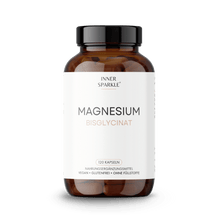
At Inner Sparkle, we consciously choose pure magnesium bisglycinate, as this form is impressive due to its high bioavailability and excellent tolerability.
Our magnesium:
This allows you to reliably supply your body with magnesium – without any compromises on quality or tolerability.
Organic magnesium compounds such as magnesium bisglycinate, magnesium citrate, or magnesium malate generally have good bioavailability.
There is no guarantee. However, many people find magnesium bisglycinate to be particularly well-tolerated and report fewer gastrointestinal complaints than with some other magnesium compounds.
Magnesium contributes to normal muscle function. Which form of magnesium is chosen depends, among other things, on individual tolerance.
Not necessarily. The decisive factors are primarily the magnesium compound used, the quality of the raw materials, and a sensible dosage, not just the price.
Magnesium can be found in pumpkin seeds, sunflower seeds, almonds, cashews, rolled oats, legumes, and spinach, among other things. Depending on its magnesium content, mineral water can also contribute to your intake.
Magnesium is the mineral itself. In magnesium bisglycinate, magnesium is bound to the amino acid glycine. The name therefore describes the magnesium compound in which the mineral is present in the supplement.
Elemental magnesium refers to the actual amount of magnesium a supplement provides. It is not equivalent to the total weight of the magnesium compound, as this also consists of the substance to which the magnesium is bound.
There is no single "best" magnesium, but there is a form of magnesium that is right for your needs.
While magnesium oxide is primarily known for its high magnesium content and magnesium citrate is widely used, magnesium bisglycinate convinces many people with its high bioavailability and excellent tolerability. That is why it is often a particularly good choice for your daily magnesium intake.
If you value high-quality ingredients, good tolerability, and easy integration into your everyday life, magnesium bisglycinate is an excellent option.
This article is for general information purposes only and does not replace professional medical advice, diagnosis, or treatment. Dietary supplements are not a substitute for a balanced and varied diet or a healthy lifestyle.
Collagen is not only found in bone broth or animal-based foods. Bell peppers, legumes, seeds, and other foods also provide important nutrients for the body's own collagen production.
Read moreShade-grown, hand-harvested, whisked with 80-degree hot water. What makes good matcha, how to prepare it at home, and three recipes that go beyond the latte.
Read moreLearn all about the effects of turmeric: how curcumin supports your health, how to increase bioavailability, and delicious recipes for your everyday life.
Read moreDid you know that your diet affects the production of your happy hormones? So there's good news: You can eat yourself happy.
Read moreBright green, finely ground, and traditional from Japan: Matcha differs significantly from ordinary green tea. What is actually in the powder is what counts.
Read moreThe yoga mat is ready, yet the phone stays in your hand at night. Good intentions rarely fail for lack of ideas, but rather because they don't fit into everyday life in the long term.
Read moreSleep better, wake up more refreshed: Discover 5 simple tips that can help you wind down more easily in the evening and support restful sleep.
Read moreMore warmth and balance in autumn: Discover 5 nourishing rituals to help you experience the cooler season consciously and comfortably.
Read moreIt’s getting cold outside, and the heating is on inside. Now, seasonal nutrition, tried-and-tested daily routines, and Ayurvedic traditions all meet.
Read moreEating in a rush, certain foods, or stress can be behind a bloated belly. Learn about the possible causes and what you can pay attention to in your everyday life.
Read moreNocturnal muscle cramps, fatigue, or tingling can have many causes. However, some of these symptoms can also occur in cases of magnesium deficiency.
Read more